How Much Is Your Home Worth?

Blog
Contact
Baird & Warner
License #:475.170258
2926 Central Street, Evanston, IL 60201
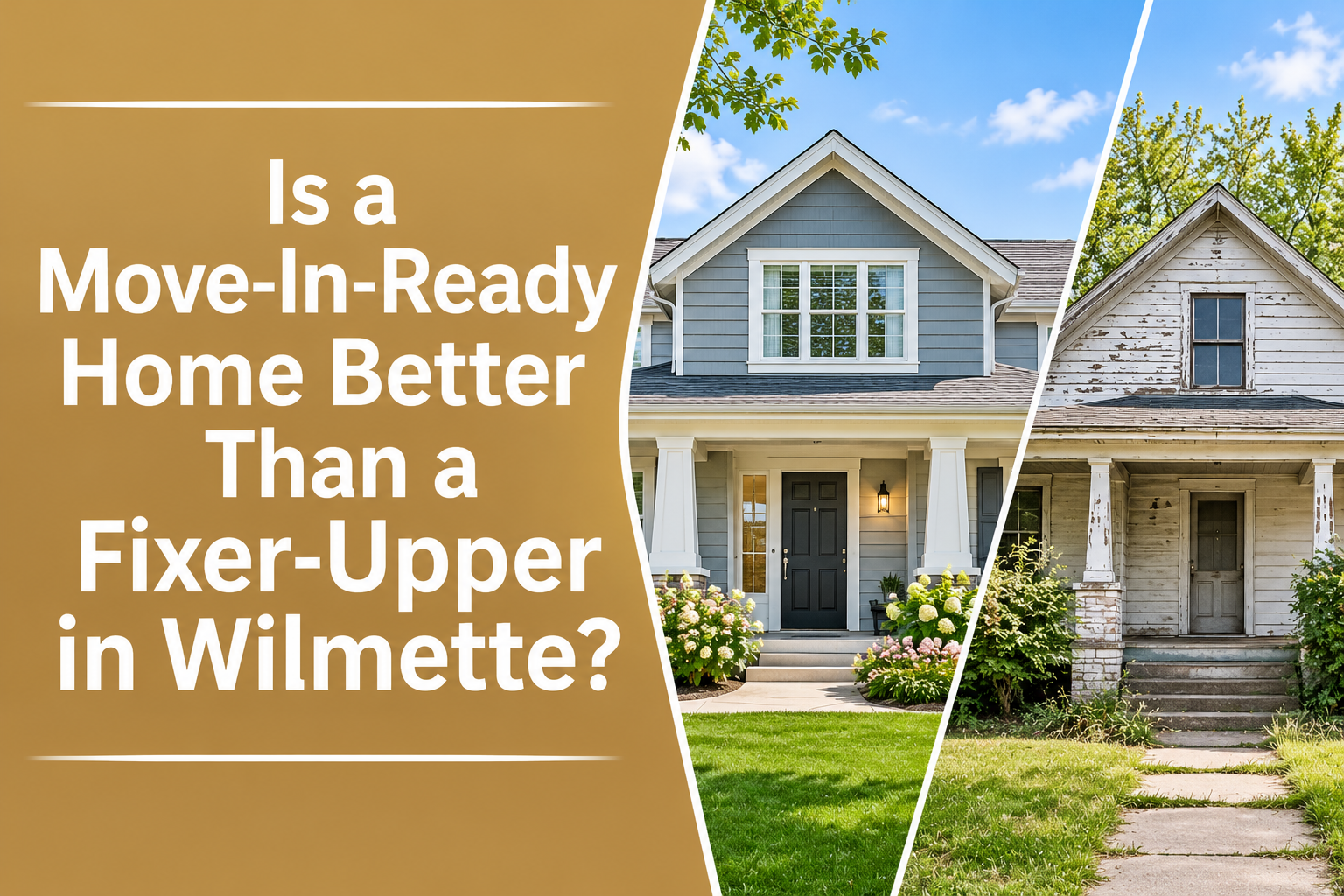
Is a Move-In-Ready Home Better Than a Fixer-Upper in Wilmette?
Buying a home in Wilmette, Illinois, involves more than choosing the right number of bedrooms or finding a neighborhood you like. The condition of the property can influence your budget, moving timeline, renovation plans, and everyday comfort after closing.
Some buyers prefer a move-in-ready home because they can settle in without planning major improvements. Others are willing to purchase a fixer-upper because they want more control over the design, finishes, and layout of their living space.
For buyers exploring Wilmette real estate, understanding these differences before making an offer can help prevent unexpected expenses and disappointing decisions.
The First Difference Is How Soon You Can Enjoy Your New Home
A move-in-ready property can make the transition into homeownership easier. Its major living spaces may already be updated, essential systems may be functioning properly, and the home may require little preparation before you move your belongings inside.
This can be particularly useful for buyers who have a specific moving date, work commitments, or a property to sell before purchasing another home.
Consider the practical differences:
Move-in-ready: More immediate use of kitchens, bathrooms, bedrooms, and common areas.
Fixer-upper: More planning around contractors, materials, project schedules, and temporary arrangements.
Partially updated home: A middle-ground option where some improvements can happen after moving in.
Buyers should look beyond fresh paint and attractive flooring. A home can look updated while still having older plumbing, electrical components, roofing, or heating and cooling equipment.
Renovation Freedom Comes With a Different Kind of Responsibility
An older Wilmette home may have architectural features, room proportions, or original details that appeal to buyers who appreciate established residential properties. Instead of paying for someone else's renovation choices, buyers may prefer to plan improvements themselves.
Before purchasing, understand the property's existing condition and investigate whether your intended improvements are practical. Structural changes, additions, exterior modifications, and other substantial projects may require permits or additional approvals.
A renovation budget should account for necessary repairs before decorative improvements. Choosing new cabinets is easier when you already understand whether the plumbing behind the walls needs attention.
The Purchase Price Is Only One Part of the Financial Decision
A fixer-upper may have a lower asking price than a comparable updated property, but that difference does not automatically make it the more affordable purchase.
The actual financial commitment includes the purchase price, closing expenses, immediate repairs, renovation costs, and ongoing maintenance.
Consider this simple comparison:
Expense or consideration | Move-in-ready home | Fixer-upper |
|---|---|---|
Initial purchase | Depends on property and condition | May offer a different entry price |
Immediate repairs | May be limited, but still require inspection | Can be substantial |
Renovation planning | Usually less urgent | Often necessary |
Contractor coordination | May be minimal | Can require considerable time |
Personal customization | May involve future updates | More opportunities for planned changes |
Unexpected expenses | Still possible | Greater potential during renovation |
Before deciding, request contractor estimates for major work rather than relying on rough online calculations. Also keep a financial reserve for problems discovered after work begins.
The goal is to understand the total ownership cost, not simply find the lowest purchase price.
Wilmette's Older Homes Deserve a Closer Look
Wilmette has an established residential character, with properties that can differ considerably in age, architectural style, layout, and renovation history.
For example, a property near Gillson Park may appeal to someone who values access to Wilmette's lakefront surroundings. However, proximity to a desirable destination should not distract from reviewing the home's drainage, exterior condition, mechanical systems, and maintenance history.
Similarly, buyers considering homes near Wilmette's Village Center or Linden Square should evaluate the actual property, nearby amenities, transportation arrangements, and everyday access that matter to their routine.
A beautiful exterior does not tell you whether a property has been maintained properly. Likewise, an older kitchen does not necessarily mean the entire house requires extensive renovation.
A Renovation Project Can Change Your Moving Timeline
Replacing flooring or updating light fixtures may be relatively straightforward. Reworking a kitchen, renovating multiple bathrooms, or addressing structural concerns can involve several stages and different contractors.
Buyers should establish which improvements are essential before moving in and which can reasonably wait.
For example, a home with an outdated bathroom but functioning plumbing may allow a buyer to move in and renovate later. A property with significant water intrusion or an unresolved electrical safety concern may require more immediate attention.
If your purchase depends on moving into the property by a particular date, discuss the renovation schedule with qualified contractors before committing to a plan.
Your Lifestyle Should Decide Which Property Makes More Sense
The best home is not necessarily the one with the newest kitchen or the most renovation potential. It is the property that works with your everyday responsibilities and future plans.
A move-in-ready home may be more suitable if you:
Need to move within a limited timeframe.
Prefer predictable responsibilities after closing.
Have limited time for renovation management.
Want to avoid coordinating multiple contractors.
A fixer-upper may be worth considering if you:
Have a clear vision for the finished property.
Can manage a longer improvement timeline.
Have sufficient funds for repairs and unexpected expenses.
Are comfortable making decisions about materials, contractors, and project priorities.
Buyers should also consider how long they expect to remain in the property. Improvements that make sense for long-term living may not be equally useful for someone expecting to move again relatively soon.
Look Beyond Wilmette When Comparing Your Options
A home search does not always need to stay within one community. Buyers exploring the North Shore may also compare properties in Evanston, where housing styles, neighborhood settings, and property conditions offer different choices.
For people considering Chicago neighborhoods, Lakeview and Lincoln Park may provide alternatives with different property types and urban living arrangements.
Buyers looking at Logan Square or Bucktown may also have different priorities when comparing older residential properties, updated interiors, and renovation opportunities.
Working with a knowledgeable local Realtor can help buyers organize these comparisons and understand what deserves closer attention before making an offer.
Make the Inspection Your Final Reality Check
Before choosing between a move-in-ready property and a fixer-upper, arrange a professional home inspection and carefully review the findings.
Do not treat an inspection as a simple formality. It is an opportunity to understand the property's current condition and identify areas that may require specialist evaluation.
For homes that have undergone renovations, ask about available permits, contractor information, warranties, and documentation of completed improvements.
Blake Galler helps buyers navigate residential real estate decisions across Wilmette and surrounding North Shore communities. As a local real estate professional, he can help buyers compare properties, consider their priorities, and approach the purchase process with a clearer strategy.
The Better Choice Is the Home That Fits Your Plans
A move-in-ready home offers convenience, while a fixer-upper can provide more opportunities for customization. Both can be worthwhile purchases when the property condition, overall expenses, and expected responsibilities are understood.
For Wilmette buyers, the most useful approach is to evaluate each home individually. Look beyond appearances, investigate major systems, understand renovation requirements, and compare the full financial commitment before making a decision.
Whether you are searching for an updated residence or a property with room for improvement, Blake Galler can help you explore your options and make a more informed real estate decision.
FAQs
1. Is a move-in-ready home worth the higher purchase price in Wilmette?
It can be, especially if you want fewer immediate repairs and a quicker move. Compare the property's condition and total ownership costs before deciding.
2. Are fixer-upper homes a good option for first-time buyers?
They can be, provided buyers have sufficient renovation funds, realistic timelines, and access to qualified professionals.
3. What should I inspect before buying an older Wilmette home?
Pay attention to the foundation, roof, plumbing, electrical systems, HVAC, windows, and basement drainage.
4. Can I renovate an older home in Wilmette after purchasing it?
Yes, but certain projects may require permits or approvals. Check applicable requirements before starting work.
5. Should I hire a contractor before making an offer on a fixer-upper?
Getting preliminary professional estimates before making an offer can help you understand the potential renovation commitment.





Disclaimer: All information contained on this website is deemed reliable but not guaranteed. All properties are subject to prior sale, change or withdrawal notice brokerblake.com believes all information to be correct but assumes no legal responsibility for accuracy.